
Tokyo Ghoul · Break the Chains
FunCat GamesAction
4.59.12K Reviews
- Version
- 3.11556
- Installs
- 1.00M
- Age Rating
- Teen
Screenshots

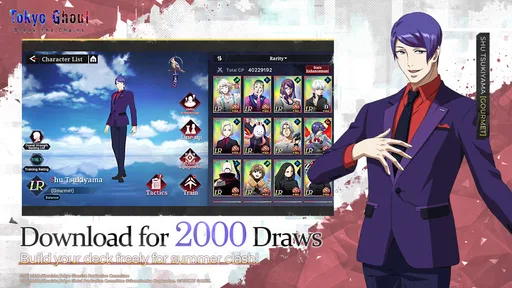
Our Review of Tokyo Ghoul · Break the Chains
 Analysis by Appyee
I tend to judge an action game by what happens in the first few minutes: does it give me a reason to act, show me clearly whether that action worked, and make the next attempt feel worthwhile? That is the lens I bring to Tokyo Ghoul · Break the Chains, a free action game from FunCat Games based on the anime’s world. Its dark subject matter gives its battles and character encounters a different tone from lighter, arcade-style mobile games, though the familiar appeal of returning for another bout still matters just as much.
For someone deciding whether to install it, the practical question is less “Is this a Tokyo Ghoul game?” than “Will I enjoy its particular mix of story, combat, and ongoing progression?” I’d look at it as a choice for anime fans who want to spend time with that setting, and for action players who don’t mind a game asking for repeated sessions. If I wanted a short, self-contained action experience with no progression or spending prompts, I’d choose something else.
Immersive Storyline and Gameplay
The first thing that hits you when you start playing Tokyo Ghoul · Break the Chains is how well it captures the essence of the series. The storyline is deeply immersive, weaving elements from the anime into the gameplay seamlessly. You find yourself in the shoes of Ken Kaneki, navigating a world where humans and ghouls coexist in an uneasy balance. That premise gives the action an identity: the conflict is not just a string of fights, but part of a setting where danger and divided loyalties are always close by.
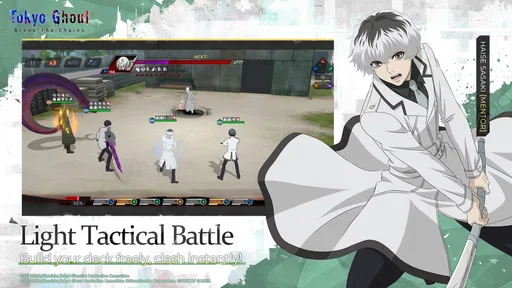
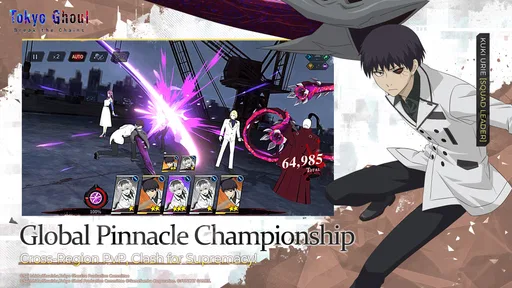
The gameplay is a mix of strategic combat and narrative-driven exploration. You’ll be tasked with making choices that affect the storyline, which adds a layer of depth often missing in mobile games. The combat system is intuitive, yet challenging enough to keep you engaged. Expect to strategize and outmaneuver your opponents as you battle through the game. The important trade-off is that this is not a pure reflex test: if I’m in the mood to tap through quick action with no interest in the story, the narrative side may slow the pace; if I want battles to sit within a larger dramatic context, it is a better fit.
In practical terms, I’d treat a first session as a chance to learn the game’s rhythm rather than trying to rush through everything. Pay attention to what the story asks you to do, then notice how combat responds to your choices and actions. That small pause helps separate a fight that needs a different approach from one where I simply need more time with the controls. It is also a useful way to decide whether the game’s balance of story and action matches what I want from a mobile game.
Graphics and Soundtrack
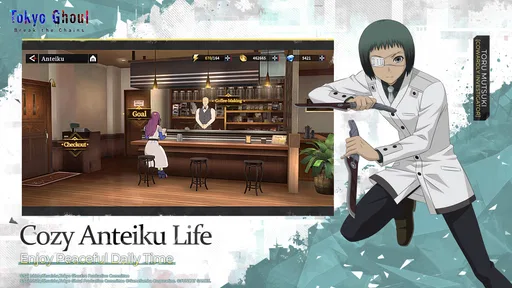
Visually, the game doesn't disappoint. The graphics are sharp and detailed, bringing the world of Tokyo Ghoul to life in vibrant color. Character designs stay true to the anime, and the environments are rich with detail, making every scene a visual treat. For me, that familiarity is especially valuable when the cast and atmosphere are part of the reason to play; the presentation helps the game feel tied to the series rather than like an unrelated action title using its name.
The soundtrack deserves a special mention. It perfectly complements the eerie and intense atmosphere of the game. The music shifts seamlessly to match the mood of the story, whether you're engaging in a fierce battle or exploring the dark streets of Tokyo. I would not expect the soundtrack alone to carry a session, but it gives quieter story moments and tense encounters a shared mood, which makes switching between them feel more natural.
That presentation also points to a useful everyday consideration: this is a game I’d save for a moment when I can actually follow the scene, rather than opening it in the middle of a noisy commute and tapping through dialogue without reading. A brief session can still work, but the anime setting and narrative framing are part of its appeal. If I only have a minute and need instant action, a simpler arcade game may serve me better; if I have a little breathing room, the atmosphere has a chance to land.
Character Development and Interaction
One of the standout features of the game is its focus on character development. You’ll have the opportunity to interact with familiar faces from the series, each bringing their own unique abilities and story arcs. These interactions are not only engaging but also crucial for progressing through the game. That makes the cast more than decoration: the appeal is partly in seeing how familiar characters connect to the action and to the story around Kaneki.
The game does a fantastic job of making you feel connected to the characters. Choices you make during interactions have consequences, which can alter relationships and influence the outcome of the story. This dynamic adds a personal touch to the gaming experience, making every decision feel significant. I’d recommend slowing down at choice points instead of treating them as throwaway prompts. Even when I’m eager to get back to combat, reading the options carefully is the sensible way to engage with a story that presents decisions as consequential.
This is also where expectations matter. Fans who know the anime are likely to get more from seeing its characters in an interactive setting, while newcomers can still follow the premise but may not feel the same pull from familiar faces. If a player prefers creating an original hero or building a story from a blank slate, this series-led approach will be less appealing. The game’s strongest emotional hook is tied to its established world, so that is a genuine preference rather than a flaw everyone will share.
Challenges and Progression
As you advance, the game becomes increasingly challenging, requiring you to upgrade your skills and strategize effectively. The progression system is well-balanced, offering a satisfying sense of growth without making you feel overpowered too quickly. That gradual climb is one reason another session can feel inviting: a tough stretch gives me a concrete reason to return, improve, and see whether a more thoughtful approach changes the result.
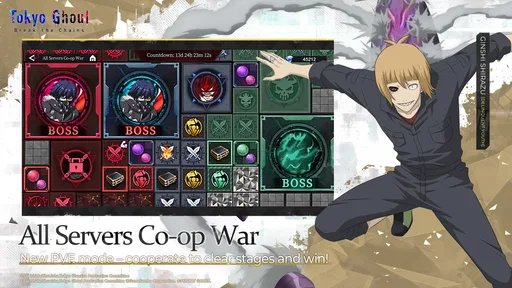
Challenges come in various forms, from intense boss battles to solving intricate puzzles. Each challenge is designed to test your skills and keep you on your toes. The satisfaction of overcoming these hurdles makes the game incredibly rewarding. For a practical routine, I’d avoid starting a demanding challenge when I have to stop immediately; a short session is better spent making steady progress, while a longer window gives me room to focus on a difficult encounter and learn from a failed attempt.
The feedback loop is straightforward in the best sense: I act, see how the encounter responds, and get a reason to adjust or continue. A victory supplies a sense of progress, while a setback points toward a need to rethink my tactics or build up further. The reset is not just closing the game and forgetting it; it is deciding what to try next time. That can be motivating, but it can also feel like a chore if I don’t enjoy repeating content or working toward gradual growth. Players who want every session to deliver a complete ending should keep that distinction in mind.
For a realistic use case, I can imagine opening it after dinner with enough time for a story beat and a fight, then leaving a difficult encounter for another evening rather than forcing a long play session. On a busy day, I’d choose a simpler game if I needed something that starts and ends in a few minutes. This one makes more sense when I’m happy to let progress accumulate across visits, and when returning to the same world is part of the pleasure.
In-Game Purchases and Ads
Now, let's talk about the business side of things. The game is free to download, which is great, but it does include in-game purchases. These are mostly cosmetic, though there are some that can give you a slight edge during gameplay. It's not pay-to-win, which is a relief, but be prepared for the occasional prompt to make a purchase. I’d set a personal spending limit before playing, especially if I’m the sort of player who finds it tempting to pay for convenience or a small advantage when progress slows.
Ads are also present but are not overly intrusive. They’re usually optional, offering rewards in exchange for watching, which is a fair trade-off if you ask me. The game manages to maintain a good balance, allowing you to enjoy it without constant interruptions. A useful rule is to treat a rewarded ad as a choice, not a required step: if the offered benefit would genuinely help me continue, I can consider it; if I’m only watching out of habit, I’d rather keep the session moving.
The game is rated Teen, and its dark ghoul-versus-human premise is worth considering for younger players and families. It is free to start, but individual in-app items range from $0.29 to $99.99, so “free” should not be read as “there is nothing to spend.” I’d check purchase settings on a shared device and talk through spending expectations before handing it to a younger player. The current version is 3.9715, and it requires Android 7.0 or later, details worth checking against a device before setting aside time to install it.
Its audience is substantial: the game has a 4.6 average from around 101,000 ratings, with more than 500,000 installs and about 9,000 written reviews. Those figures suggest plenty of players have tried it, but they cannot tell me whether its story-heavy structure suits my own taste. I’d use them as context, not as a substitute for asking whether I want a Tokyo Ghoul action game or a different kind of mobile experience.
Compared with the usual alternatives in mobile action, this leans more on a recognizable anime world and narrative progression than on being a quick, interchangeable combat diversion. That is its clearest advantage for fans; a standalone action game may be a better choice for someone who values immediate fights over character interactions, or who wants no connection to an existing series. Conversely, if the setting and cast are exactly what I’m looking for, a generic action title may feel less engaging even if it gets to the action faster.
In conclusion, Tokyo Ghoul · Break the Chains is a compelling mobile game that offers a blend of engaging storytelling, strategic gameplay, and striking presentation. It was released on October 28, 2024, by FunCat Games, and I’d recommend it most readily to people who already enjoy the series or who are curious about its dark world and willing to return for gradual progress. If you want a self-contained action game, dislike purchase prompts, or have little patience for story between fights, it may not be the right fit. For me, its loop works when the reward is not just winning a battle, but having a reason to step back into the story and see what happens next.
Verdict
Strengths of Tokyo Ghoul · Break the Chains
- Immersive storyline with rich character development.
- Engaging combat mechanics keep gameplay exciting.
- High-quality graphics enhance the gaming experience.
- Frequent updates introduce new content regularly.
- User-friendly interface ensures easy navigation.
Limitations of Tokyo Ghoul · Break the Chains
- In-app purchases can become quite expensive.
- Requires a stable internet connection to play.
- Some levels can be overly challenging.
- Occasional bugs might disrupt gameplay.
- Limited customization options for characters.
Similar Picks in This Category
View All
Temple Run 2: Endless Escape
Imangi Studios4.1

PUBG MOBILE
Level Infinite4.3

Free Fire: 9th Anniversary
GARENA INTERNATIONAL I4.4

Talking Tom: Hero Dash Run
Outfit7 Limited4.3

slither.io
Lowtech Studios3.9

Sniper 3D:Gun Shooting Games
Wildlife Studios4.6
Frequently Asked Questions
What is the main objective of Tokyo Ghoul · Break the Chains?
Tokyo Ghoul · Break the Chains is an action-packed role-playing game that immerses players in the world of Tokyo Ghoul. The main objective is to control your character, either as a ghoul or an investigator, to complete missions, defeat enemies, and unravel the intricate storyline inspired by the anime and manga series.
Is Tokyo Ghoul · Break the Chains free to play?
Yes, Tokyo Ghoul · Break the Chains is free to download and play. However, it offers in-app purchases that can enhance your gaming experience. These purchases include character upgrades, special abilities, and cosmetic items. Players can enjoy the game without spending money, but purchases may provide a competitive edge.
What types of characters can I play in Tokyo Ghoul · Break the Chains?
In Tokyo Ghoul · Break the Chains, players can choose between playing as a ghoul or an investigator. Each character type offers unique abilities and gameplay styles. Ghouls have powerful kagune attacks, while investigators wield quinques. This duality allows for diverse strategies and keeps the gameplay dynamic and engaging.
Does Tokyo Ghoul · Break the Chains require an internet connection?
Yes, Tokyo Ghoul · Break the Chains requires a stable internet connection to play. This is essential for accessing real-time multiplayer features, updates, and syncing your progress. Players should ensure they have a reliable connection to fully enjoy all aspects of the game, including its social and competitive elements.
What are the system requirements for Tokyo Ghoul · Break the Chains?
Tokyo Ghoul · Break the Chains is available on both Android and iOS devices. For Android, it requires version 5.0 and up, while iOS users need iOS 11.0 or later. The game also demands a minimum of 2GB RAM for smooth performance. Ensure your device meets these requirements for optimal gameplay.
Play our best games!


